- Understanding Termite Treatment: More Than Just a Spray
- Types of Termite Treatments: Choosing Your Defense
- What Does Termite Treatment Cost? Breaking Down the Numbers
- Hiring a Termite Treatment Professional: Your Due Diligence Checklist
- Red Flags to Avoid When Choosing a Termite Treatment Company
- The Essential Questions to Ask Before You Sign a Termite Treatment Contract
- The Best Timing for Termite Treatment and Long-Term Prevention
- Frequently Asked Questions
You notice a small, quiet crack in the woodwork, a faint trail of mud along your foundation, or perhaps a discarded wing near a window sill. That first moment of suspicion can turn into a full-blown homeowner’s nightmare. Termite treatment isn't a discretionary home improvement project; it's an urgent defense of your single largest investment. Subterranean termites, the most common and destructive type, cause over $5 billion in property damage annually in the U.S. alone, and most standard homeowners insurance policies explicitly exclude this type of damage. The right termite treatment strategy can protect your home’s structural integrity and prevent financial catastrophe, but navigating the industry requires knowledge and a sharp eye.
This article is your comprehensive guide. We’ll move beyond the fear and focus on actionable intelligence. You’ll learn about the different methods of professional termite treatment, what they realistically cost, and most importantly, how to identify and hire a reputable, licensed professional who will do the job right. We’ll arm you with a checklist of critical questions and highlight the red flags that should send you looking for another provider.
Understanding Termite Treatment: More Than Just a Spray
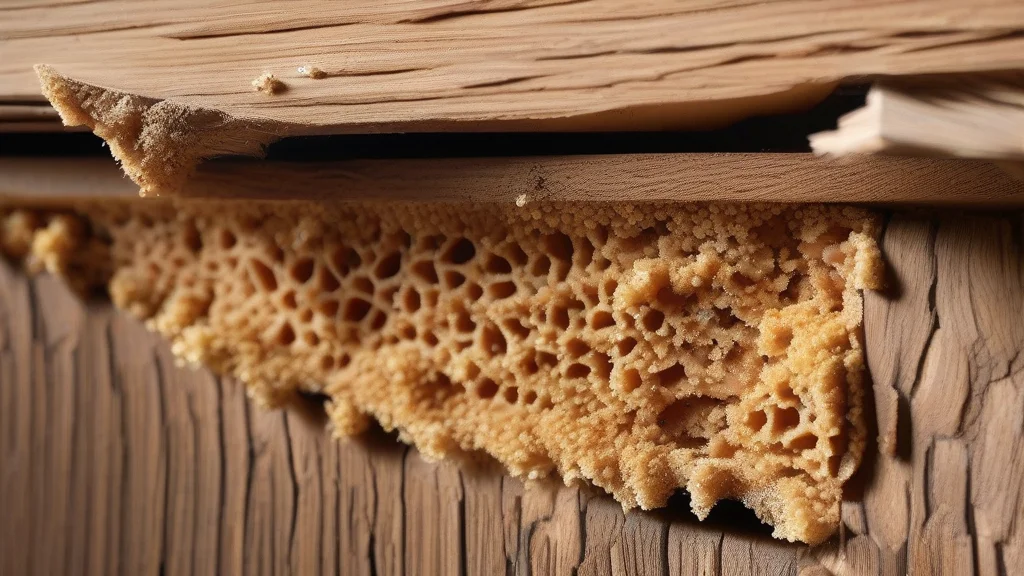
Many homeowners mistakenly think of termite treatment as a one-time application of pesticide. The reality is far more nuanced and strategic. A professional termite treatment is a systematic process designed to create a long-lasting barrier of protection. It begins with a meticulous inspection to confirm the species, locate the colony, and assess the extent of any existing damage. This diagnostic phase is critical; applying the wrong treatment in the wrong place is a waste of money and gives the infestation time to spread. The goal isn't just to kill the termites you can see, but to eliminate the entire colony and prevent future colonies from ever reaching your home.
The approach varies dramatically based on the termite type. Subterranean termites build mud tubes to travel from their underground nests to your wood, requiring soil treatments or baiting systems. Drywood termites, however, live inside the wood they consume and may require whole-structure fumigation or localized wood injections. Understanding this distinction is the first step in evaluating any termite treatment proposal. A reputable inspector will explain exactly what they’ve found and why their recommended solution is the most effective for your specific situation.
The most effective termite treatment is a customized plan based on a thorough inspection, not a one-size-fits-all chemical application. Knowing your enemy (the termite species) dictates the entire battle strategy.
Types of Termite Treatments: Choosing Your Defense
Modern pest control offers several proven methods for termite treatment. Each has distinct advantages, costs, and ideal use cases. Your home's construction, the local climate, and the severity of the infestation all play a role in determining the best course of action.
Liquid Soil Treatments (Termiticides)
This is the most traditional and widely used form of termite treatment. A trained technician applies a liquid termiticide to the soil around and sometimes beneath your home’s foundation, creating a continuous chemical barrier. When termites attempt to tunnel through this zone, they either die or are repelled. Modern non-repellent termiticides are particularly effective because termites cannot detect them, allowing the insects to carry the poison back to the colony, facilitating a colony-wide elimination. The protection can last for 5 to 10 years, but it requires precise application and may involve drilling through concrete slabs or patios.
Termite Baiting Systems
Baiting offers a more targeted and often less invasive approach. Stations containing a cellulose material (the bait) are placed in the ground around the property’s perimeter. When termites find and begin feeding on the bait, it is replaced with a slow-acting insect growth regulator. The termites share this bait with the colony, eventually disrupting the molting process and eliminating the entire population over several months. This method is excellent for monitoring and prevention, but it is generally slower acting than liquid barriers for an active infestation and requires ongoing professional monitoring and maintenance.
Wood Treatments and Foams
For localized infestations, particularly with drywood termites, direct wood treatments can be effective. Technicians inject termiticide foams or liquids directly into infested wood members, galleries, and wall voids. This method is less disruptive than fumigation but requires the technician to accurately locate all infested areas. It’s often used as a spot treatment for isolated problems or in conjunction with other methods.
Advantages of Liquid Treatments
- Immediate barrier — Creates a fast, continuous zone of protection around the entire structure.
- Proven long-term results — When applied correctly, protection lasts for a decade or more.
- Colony impact — Non-repellent formulas can transfer poison back to the nest.
Disadvantages of Liquid Treatments
- Soil disruption — Often requires trenching and drilling of concrete, patios, or driveways.
- Environmental factors — Heavy rain or soil composition can affect the chemical barrier over time.
- Higher upfront cost — Typically more expensive for initial installation than bait systems.
What Does Termite Treatment Cost? Breaking Down the Numbers
The price of a termite treatment is not a flat fee; it’s a calculation based on multiple variables. Homeowners should expect a range and understand what drives the final quote. The national average for a full liquid soil termite treatment hovers between $1,200 and $2,500, with more complex jobs easily reaching $3,500 or more. Baiting systems often start with a lower installation cost, around $1,000 to $2,000, but include mandatory annual monitoring fees of $300 to $600.
Important
The absolute cheapest quote is often the riskiest. Extremely low bids may indicate the use of diluted chemicals, insufficient application, or a company that cuts corners on licensing and insurance. Your home's structural safety is not the place to prioritize bargain hunting.
The primary factors influencing your termite treatment cost include:
- Home size and foundation type — Larger homes and those with complex foundations (like slab-on-grade or homes with crawl spaces and basements) cost more to treat thoroughly.
- Extent of infestation — An early-stage infestation confined to one area is less expensive to treat than widespread damage requiring structural repairs.
- Treatment method — Liquid barriers typically have a higher initial cost but no annual fees, while bait systems have lower installation but recurring costs.
- Geographic location — Labor rates and termite pressure vary significantly by region, affecting overall pricing.
- Company reputation and guarantees — A premium company with a robust transferable warranty will often charge more, but that warranty adds substantial value and peace of mind.
Hiring a Termite Treatment Professional: Your Due Diligence Checklist
Selecting the right company is the most critical decision in your termite treatment journey. This is not a DIY project; misapplied chemicals can be hazardous and ineffective. Your goal is to find a licensed, insured, and reputable professional. A great starting point is a service like HomeProMatcher, which connects homeowners with pre-screened, licensed local pros, eliminating the guesswork and endless online searches. Whether you use a matching service or search independently, your due diligence checklist should include these non-negotiable steps.
- Verify State Licensing and Insurance
Every state requires pest control companies to be licensed. Ask for their license number and verify it online with your state's regulatory body. Equally important is proof of general liability insurance and worker's compensation. This protects you if anything goes wrong on your property.
- Get Multiple Detailed Quotes
Obtain at least three written estimates. A proper quote should be a detailed proposal, not a scribbled number on a business card. It must specify the treatment method, the chemicals to be used (with EPA registration numbers), the square footage to be treated, and the exact terms of the warranty.
- Research Reputation and Reviews
Check the company’s rating with the Better Business Bureau and read verified customer reviews on multiple platforms. Look for patterns in feedback—consistent praise for thoroughness or repeated complaints about poor follow-up.